Skip to content




Minimal dressing is often seen as the modern choice. Cleaner silhouettes, softer colours, lighter detailing. Many of us say we prefer understated sarees that are easy to wear and effortless to style. And yet, when it comes to choosing a saree for a meaningful occasion, Banarasi zari saree almost always finds its way in.
It may appear as a fine border, a subtle jaal, or quiet detailing woven into the fabric, but gold continues to hold its place in Indian wardrobes. This preference is not accidental. Our pull towards zari goes far beyond surface beauty or passing trends.

Why Gold Still Feels Important
In Indian culture, gold has always stood for value, celebration, and continuity. It marks milestones- weddings, festivals, family rituals and carries emotional weight through jewellery, textiles, and heirlooms.
When zari is woven into a saree, it brings this cultural familiarity with it. Psychologically, gold creates a sense of assurance. It makes a saree feel complete, intentional, and appropriate for important moments, even when the overall design remains minimal.
This is why zari saree rarely feels excessive. Even in restrained weaves, it adds presence without overpowering the fabric. It offers quiet confidence.

When Zari Was Wealth, Not Decoration
Historically, zari held far more than aesthetic value. In older Banarasi sarees, the gold and silver threads used in weaving were often pure or close to pure. These sarees were genuinely precious, not just emotionally, but materially.
Families viewed such sarees as a form of security. In difficult financial times, the zari itself could be sold or repurposed, helping households navigate uncertainty. This belief shaped how Banarasi zari sarees were bought, worn, and preserved. They were not impulse purchases, but considered investments.
This mindset is what created true heirlooms. Sarees were stored carefully, worn sparingly, and passed down through generations. The presence of zari signified permanence. It meant the saree was meant to last, both in style and in worth.
That psychology has quietly endured.

Even today, we instinctively associate zari with value. A pure zari saree with gold threads still feels like a wiser choice, something worth owning rather than merely wearing. This is why investing in well-woven zari has always felt reassuring. Not because of extravagance, but because it represents foresight, craftsmanship, and long-term value.
The Shift Towards Subtle Zari
While earlier Banarasi sarees often featured heavy pallus and dense zari work, contemporary preferences lean towards balance. Today, many women seek sarees that are versatile and wearable, while still honouring craftsmanship.
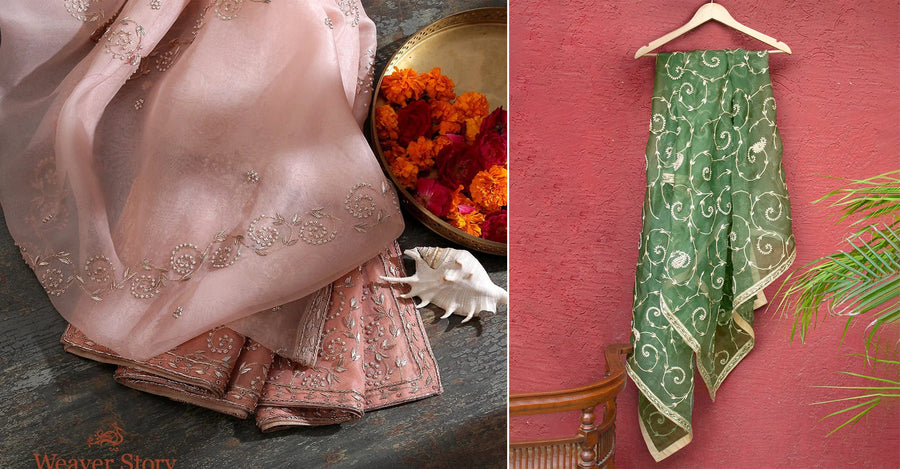
At WeaverStory, this shift is reflected in the way Banarasi sarees are curated. Fine gold zari borders, delicate cutwork jaals, and softly detailed butis allow the weave and fabric to lead. The focus is not on ornamentation for its own sake, but on thoughtful placement.

This approach makes zari adaptable. A Banarasi saree with restrained gold detailing transitions easily from intimate daytime gatherings to evening celebrations, without ever feeling out of place.
Why Zari Makes a Saree Feel Special
Zari has the ability to elevate even the simplest weave. A plain silk or georgette saree may feel everyday, but the moment gold threads are introduced, the saree gains purpose.
In Banarasi weaving, this is especially significant. Zari is not applied as an afterthought. It is woven into the structure of the saree itself. Techniques such as cutwork and jaal weaving ensure that the gold threads become part of the fabric’s identity, creating depth, durability, and texture.
Perhaps this is why zari is instinctively associated with occasion-wear. It signals that the zari saree is meant for moments that matter.
Banarasi Zari and Craftsmanship
In Banarasi handloom weaving, zari is structural. It defines motifs, outlines patterns, and enhances the texture of the fabric. The quality of zari, its tone, and how it interacts with silk, georgette, or tissue determine the final character of the saree.
WeaverStory’s Banarasi real zari sarees collection places strong emphasis on these details. Whether crafted in pure georgette, silk, or tissue, the zari is chosen carefully to complement the fabric’s movement and finish. The result is sarees that feel refined rather than ornate.
This attention to detail ensures longevity. A thoughtfully woven Banarasi zari saree does not feel tied to a single season or trend. It remains relevant across years and occasions.

Why We Keep Coming Back to Zari
Even as fashion preferences evolve, zari remains constant because it offers reassurance. It bridges tradition and modern styling without forcing a choice between the two.
For many women, zari represents trust. These are the sarees you reach for when you want to feel confident and appropriately dressed. Not because they are loud, but because they are dependable.
Choosing Zari, the WeaverStory Way
At WeaverStory, zari is never used for excess or spectacle. It is used with intention- to enhance the weave, respect the craft, and create Banarasi sarees that can be worn and treasured over time.

Our sarees are designed for women who value detail, craftsmanship, and quiet elegance. Each piece is an investment in handloom skill, cultural continuity, and enduring style.
Explore WeaverStory’s Banarasi collection and discover sarees where zari is not just decoration, but value woven into every thread.
Author: Pallavi Rohatgi Gupta