Skip to content




A heavy vs. light embroidered dupatta choice depends on the occasion, outfit, and desired level of detail. Choose heavier embroidery for weddings, receptions, and bridal celebrations; choose lighter embroidery for daytime functions, festive gatherings, or already embellished outfits. The right balance keeps your ensemble elegant without making it look overworked.
A heavy vs. light embroidered dupatta is best chosen by matching the embroidery level to the occasion and the rest of your outfit. Heavy styles create a grand focal point, while lighter designs offer balance and versatility. WeaverStory brings hand-embroidered options in Organza, Chanderi, Silk, and Tissue for different styling needs. Ready to find yours?
What Makes a Dupatta Heavy or Light?
The difference is not simply about physical weight. It is largely determined by embroidery density, embellishment, borders, motifs, and the visual impact created by the finished piece.
What Makes the Heavy vs. Light Embroidered Dupatta Choice Feel Right?
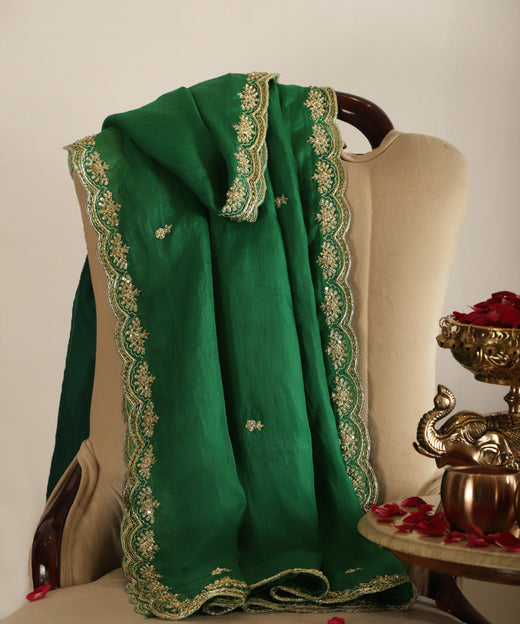
A heavy design usually has concentrated embroidery, ornate borders, metallic detailing or prominent motifs. Zardozi, Gota and layered embellishment can create a richer, more formal appearance. A heavy dupatta works particularly well when you want it to become the centre of your look.
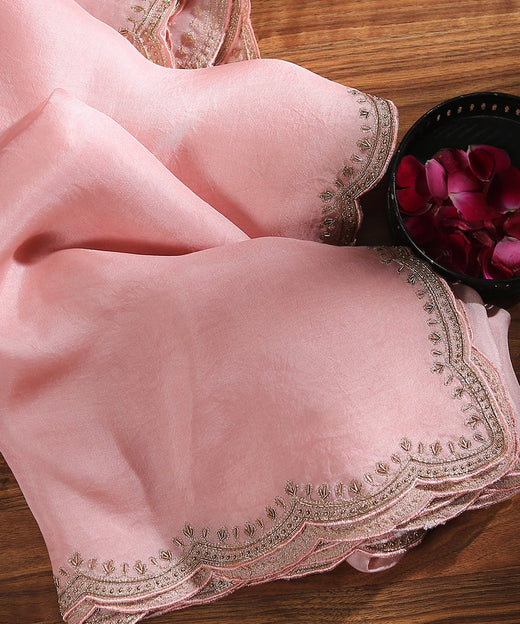
A lighter design generally uses restrained embroidery, smaller motifs, finer borders or greater open space across the fabric. Resham or delicate detailing can add interest without competing with the rest of your outfit.
Heavy vs. Light Embroidered Dupatta: Quick Comparison
|
Feature |
Heavy Embroidered Dupatta |
Light Embroidered Dupatta |
|
Overall look |
Grand and statement-making |
Elegant and understated |
|
Embroidery |
Dense or elaborate |
Fine or restrained |
|
Best occasions |
Weddings, receptions, bridal celebrations |
Day functions, festive gatherings |
|
Best with |
Simple or moderately detailed outfits |
Embellished or minimal outfits |
|
Visual impact |
High |
Subtle to moderate |
|
Styling |
Statement drape |
Easy, balanced drape |
Heavy vs. Light Embroidered Dupatta: Which Is Better for Each Occasion?
The best choice changes with the setting. Use this occasion guide before buying a heavy dupatta online or choosing a subtler embroidered piece.
|
Occasion |
Better Choice |
Why |
|
Wedding |
Heavy |
Adds grandeur to formal dressing |
|
Reception |
Heavy |
Creates a polished evening statement |
|
Bridal celebration |
Heavy |
Complements richly detailed ensembles |
|
Sangeet |
Heavy or medium |
Adds festive visual interest |
|
Mehendi |
Light to medium |
Keeps the look celebratory without overwhelming it |
|
Haldi |
Light to medium |
Suits bright daytime dressing |
|
Daytime function |
Light |
Gives an elegant, balanced finish |
|
Family gathering |
Light |
Refined and versatile |
|
Embellished outfit |
Light |
Prevents visual competition |
|
Simple outfit |
Heavy |
Gives a plain base a statement finish |
When Should You Choose a Heavy Embroidered Dupatta?
For a heavy vs. light embroidered dupatta decision, choose heavier embroidery when the occasion calls for a noticeable, dressed-up finish.
Choose it when:
-
You are attending a wedding or reception.
-
Your outfit is relatively simple and needs a statement layer.
-
You want detailed embroidery to become the focal point.
-
You are styling a traditional lehenga or formal suit.
-
You prefer a regal or maximalist aesthetic.
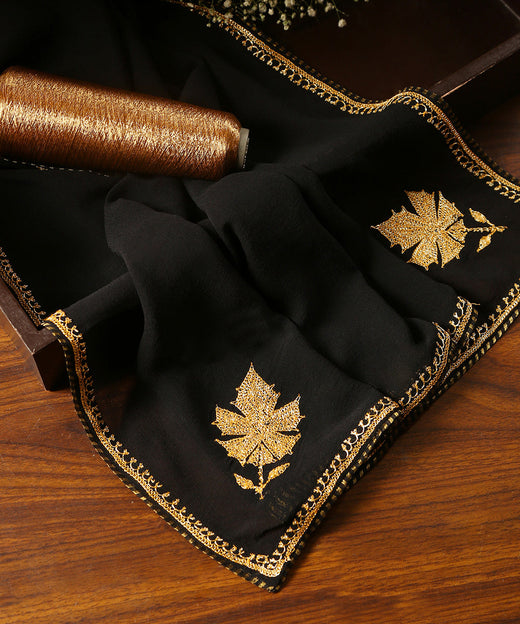
Zardozi is particularly effective when you want a richer traditional look. WeaverStory’s collection includes hand-embroidered Organza pieces with Zardozi motifs, borders and Kiran, along with styles that combine Zardozi and Gota work.
A simple styling rule helps: if your outfit is already richly embroidered, let the dupatta provide balance rather than adding another competing focal point.
When Is a Light Embroidered Dupatta the Better Choice?
For a heavy vs. light embroidered dupatta decision, a light embroidered dupatta is ideal when you want traditional detailing without making the entire outfit feel heavy.
Choose a lighter design when:
-
Your kurta, lehenga or suit already has substantial embellishment.
-
You are dressing for a daytime event.
-
You want an understated festive look.
-
You need a versatile piece for several outfits.
-
You prefer fine embroidery over dense ornamentation.
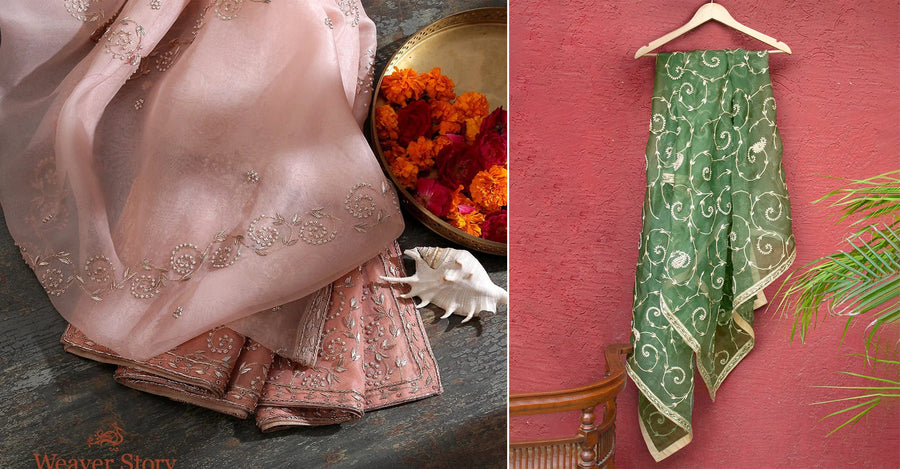
Chanderi and Organza can create very different visual effects depending on the embroidery used. WeaverStory’s collection includes Chanderi pieces with Resham and pearl detailing alongside Organza styles featuring Zardozi and other traditional techniques.
How to Choose the Right Embroidery for Your Outfit
The most useful way to approach a heavy vs. light embroidered dupatta decision is to assess four things: the occasion, outfit, fabric and embroidery technique.
1. Match the Occasion
A wedding or formal reception can support more elaborate embroidery. For daytime celebrations or smaller family functions, restrained detailing often looks more natural.
2. Look at Your Outfit
Think about the whole ensemble rather than the dupatta alone.
-
Simple outfit + heavy dupatta = statement look
-
Heavy outfit + light dupatta = balanced look
-
Heavy outfit + heavy dupatta = maximalist look
-
Simple outfit + light dupatta = understated look
3. Consider the Fabric
WeaverStory’s hand-embroidered collection features Organza, Chanderi, Pure Silk and Tissue, giving you different textures and finishes to work with. The fabric should complement the silhouette and mood of your outfit rather than simply matching its colour.
4. Consider the Embroidery Technique
Zardozi, Resham, Aari, Mukaish, and Gota create distinct visual effects. Do not judge a dupatta only by the name of the embroidery. Look at how densely the work is placed and how it interacts with the base fabric.
Heavy Dupatta for Women: WeaverStory Styles to Consider
If you are looking for a heavy dupatta for women, WeaverStory offers hand-embroidered styles that show how different fabrics and techniques can change the overall look.
Red Handloom Organza Dupatta with Hand Embroidered Zardozi Motifs and Handcrafted Kiran
This red Organza design combines hand-embroidered Zardozi motifs with handcrafted Kiran. Its rich colour and detailed finish make it a strong option for wedding and festive styling.
Handloom Yellow Organza Dupatta with Zardozi Work
The yellow Organza design features Zardozi work and suits bright celebratory dressing. It works particularly well for haldi, mehendi, and daytime celebrations when you want festive detail with a vibrant palette.
Handloom Pista Chanderi Zardozi Dupatta with Resham and Pearls
This Pista Chanderi design combines Zardozi, Resham and pearl embellishments. Its softer colour palette gives ornate embroidery a more understated character and works beautifully with bridal and festive ensembles.
White Handloom Organza Dupatta with Intricate Hand Embroidery Zardozi
A white Organza base with intricate Zardozi embroidery creates a statement look while keeping the colour neutral. Style it with a contrasting or tonal outfit depending on the effect you want.
How to Buy a Heavy Work Dupatta Online
Buying heavy work dupatta online requires more than checking the product photograph. Look closely at:
-
Base fabric and weave
-
Embroidery technique
-
Density and placement of work
-
Border detailing
-
Product measurements
-
Care instructions
-
Product images and colour details
For hand-embroidered pieces, proper care matters. WeaverStory recommends dry cleaning and storing embroidered dupattas in muslin cloth to help preserve the embroidery and fabric texture. For silk pieces, our guide on how to store silk sarees covers similar storage principles in more detail.
How to Style Heavy and Light Embroidered Dupattas
For a heavy design, let the dupatta lead the look. Pair it with a solid or lightly detailed outfit, keep jewellery balanced, and choose a drape that displays rather than hides the embroidery. Our guide on how to wear lehenga dupatta explains draping styles that keep the embroidery visible.
For a light design, you have more freedom. Pair it with an embroidered suit, printed outfit or contemporary silhouette. A lighter dupatta can also soften an outfit that already has strong embellishment. If you are balancing jewellery alongside the dupatta, our guide on how to choose jewellery for saree covers the same principle of one clear focal point.
Why Choose a Hand-Embroidered Dupatta from WeaverStory?
WeaverStory brings together handloom fabrics and traditional Indian embroidery in a collection centred on craftsmanship and heritage. Its embroidered dupattas feature techniques including Zardozi, Resham, Aari, Mukaish and Gota, with bases such as Organza, Chanderi, Pure Silk and Tissue.
The collection is handcrafted by artisans from weaving clusters across Banaras, Chanderi, Maheshwar, Gujarat, Jammu & Kashmir and Kanchipuram, connecting contemporary styling with regional textile traditions.
This is about more than heavy or light embroidery. It is also about selecting a fabric, colour, technique, and level of detail that feels right for your occasion.
Final Thoughts: Choose the Dupatta That Completes the Look
The right heavy vs. light embroidered dupatta choice should complement the occasion rather than compete with it. Choose heavy embroidery when you want grandeur, detail, and a strong focal point. Choose light embroidery when balance, versatility and understated elegance matter more.
For handcrafted Indian textiles, explore WeaverStory’s hand-embroidered dupatta collection and find a piece that fits your occasion, outfit and personal style. Whether you are searching for a heavy dupatta for women for a wedding or an elegant embroidered layer for a daytime celebration, choose craftsmanship that you will want to wear beyond a single event.
Explore WeaverStory’s Hand-Embroidered Dupattas and discover a handcrafted piece for your next celebration.
Frequently Asked Questions
Q1. How do I choose between a heavy and light embroidered dupatta?
Match the embroidery to your occasion and outfit. Choose heavy work for grand events and simple outfits; choose lighter work for daytime occasions or embellished ensembles.
Q2. Can a heavy dupatta be worn with a heavily embroidered outfit?
Yes. It creates a maximalist look, but keep the colours and embroidery styles coordinated so the ensemble feels intentional.
Q3. Is Organza suitable for embroidered dupattas?
Yes. Organza is used across WeaverStory’s embroidered collection, including designs featuring Zardozi, Gota and other detailing.
Q4. What is the best heavy dupatta for a wedding?
A richly embroidered Zardozi dupatta is a strong choice when you want a formal, statement finish.
Q5. Why choose a hand-embroidered dupatta?
Hand embroidery adds distinctive craftsmanship and detail. WeaverStory combines traditional techniques with handloom fabrics rooted in Indian textile heritage.
Q6. Will a light embroidered dupatta work with a lehenga?
Yes. A lighter embroidered dupatta can balance a heavily embellished lehenga and keep the overall look from becoming visually overwhelming.
Q7. How should I care for a hand-embroidered dupatta?
Dry clean it and store it in muslin cloth. This helps protect the embroidery and fabric texture.
Q8. What should I check before buying a heavy dupatta online?
Check the fabric, embroidery technique, work density, border, measurements, product images and care instructions before ordering.