Skip to content




To choose an embroidered dupatta to match your outfit, consider its colour, fabric, embroidery, border, and occasion. A heavily embellished outfit usually works best with balanced detailing, while a plain outfit can carry a statement dupatta. Choose complementary colours, compatible fabrics, and embroidery that enhances rather than overwhelms your overall look.
An embroidered dupatta can transform a simple outfit into an elegant festive look, but the right choice depends on colour, texture, embroidery and occasion. For a plain suit, a detailed dupatta can become the focal point; for an already embellished outfit, subtler embroidery creates better balance. The key is knowing what to pair with what, and that is where thoughtful styling begins.
How to Choose an Embroidered Dupatta to Match Your Outfit
Start with the outfit you already own rather than choosing the dupatta in isolation. Look at its dominant colour, fabric, embellishment and overall mood. Your dupatta should either complement these elements or introduce a deliberate contrast.
Keep these four factors in mind:
-
Colour: Match a shade from the outfit or choose a tasteful contrast.
-
Embroidery: Balance the amount of embellishment already present.
-
Fabric: Pair fabrics with compatible textures and drape.
-
Occasion: Choose lighter details for daytime events and richer embroidery for weddings and formal celebrations.
This simple approach prevents the dupatta from looking disconnected from the rest of your ensemble.
How to Match an Embroidered Dupatta by Colour
Colour is usually the first thing people notice, so it deserves careful consideration. You do not need an exact colour match. In fact, using a complementary or contrasting shade can make the outfit more interesting.
With a Solid-Coloured Outfit
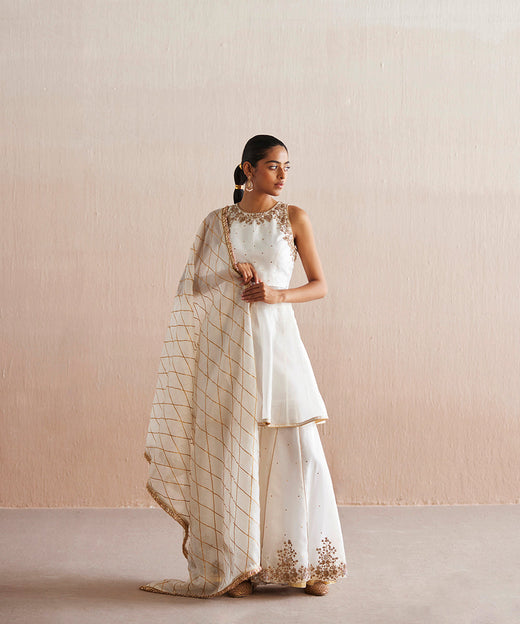
A plain suit, kurta or lehenga gives you more freedom to experiment. A richly detailed dupatta can become the statement element while keeping the rest of the outfit understated.
For example, a neutral or pastel outfit can be paired with metallic embroidery, while a darker outfit can be lifted with gold, pink, red or jewel-toned detailing.
With a Printed Outfit
When your outfit already has prints, avoid introducing a dupatta with equally dominant patterns. Instead, pick one colour from the print and repeat it through the dupatta.
This creates coordination without making the ensemble look overly matched.
With Pastel Outfits
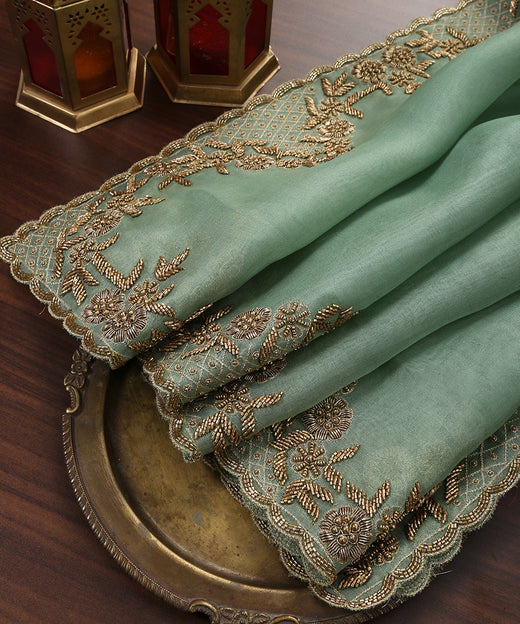
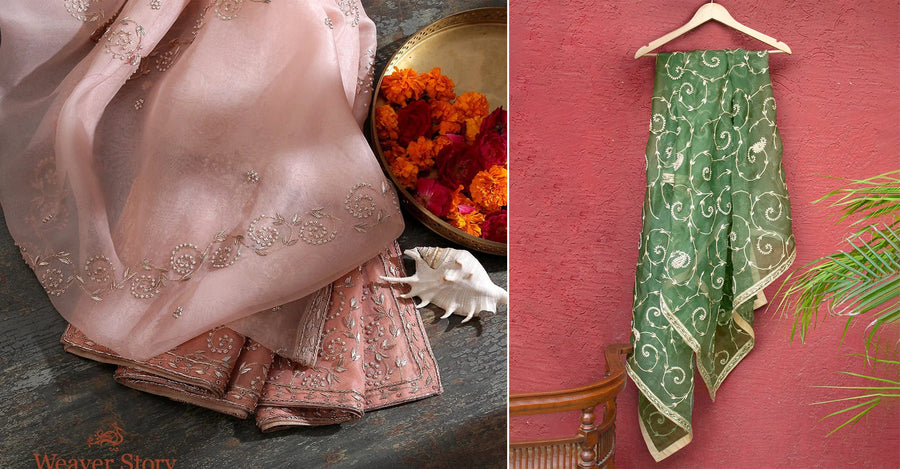
Pastels pair beautifully with delicate embroidery. Pista, peach, sage, blush pink, ivory and powder blue work well with subtle Resham, pearl or restrained metallic detailing.
The Handloom Pista Chanderi Zardozi Dupatta with Resham and Pearls is a good example of this approach. It combines a pista-green Chanderi base with Zardozi, Resham threadwork and pearl embellishments.
With Dark or Jewel-Toned Outfits
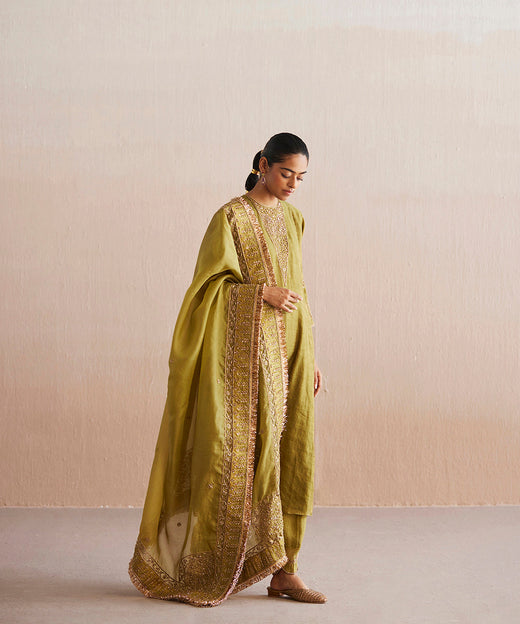
Deep red, purple, bottle green, hot pink and sea blue can carry more pronounced embroidery. Metallic Zardozi or Gota detailing can create a rich festive appearance without requiring additional heavy embellishment elsewhere.
How to Match Embroidery With Your Outfit
The embroidery should work with your outfit rather than compete with it.
If your suit already features elaborate embroidery, choose a dupatta with a defined border, smaller motifs or more restrained detailing. If your outfit is simple, you can make the dupatta the centre of attention.
Consider these popular approaches:
-
Zardozi: Ideal for regal, formal and wedding-inspired styling.
-
Resham: Adds colour and softness through threadwork.
-
Gota or Gota Patti: Works particularly well for festive and traditional looks.
-
Pearls: Create a softer, refined finish.
-
Kiran: Adds definition and shimmer along the edge.
WeaverStory's collection includes hand-embroidered styles featuring Zardozi, Resham, Aari, Mukaish and Gota work across fabrics such as Organza, Chanderi, Pure Silk and Tissue.
Which Fabric Should You Choose for an Embroidered Dupatta?
Fabric changes how embroidery looks and how the dupatta falls over the outfit. Consider both the occasion and the texture of your clothing. If you want a broader understanding of how different fabrics behave, our guide to the different types of saree fabric explains the basics of drape and texture.
Organza
Organza has a structured, sheer appearance that works especially well with detailed embroidery and defined borders. It is a natural choice for festive and formal styling.
Chanderi
Chanderi offers a lighter, airy feel and works beautifully with delicate threadwork and pearl embellishment. It can create an elegant look without feeling overly heavy.
Silk
Silk provides a richer base for elaborate embroidery and pairs naturally with formal suits, lehengas and occasionwear.
Tissue
Tissue has a luminous appearance that works particularly well with metallic embellishment and festive outfits.
WeaverStory's current collection features Organza, Chanderi, Silk and Tissue among its hand-embroidered offerings.
How to Choose an Embroidered Dupatta for Different Outfits
The same dupatta can create very different looks depending on the outfit underneath it.
With a Plain Suit
Let the dupatta become the statement piece. A plain kurta set in ivory, beige, black, pastel or another solid shade provides a clean backdrop for Zardozi, Gota or other detailed embroidery.
With a Silk Suit
A silk suit already has a luxurious texture, so choose embroidery that complements its richness. Zardozi, Resham and carefully placed metallic details can work particularly well.
With a Lehenga
Coordinate the dupatta with one element of the lehenga, such as its border, embroidery or dominant colour. A contrasting dupatta can also work when its embroidery connects visually with the lehenga. For drape-specific guidance, our guide on how to wear dupatta on lehenga covers the styling basics.
With an Anarkali
Consider the length and movement of the outfit. A lightweight embroidered dupatta with a defined border can enhance the flowing silhouette without making it appear crowded.
With a Contemporary Outfit
A statement dupatta can introduce traditional craftsmanship to a modern silhouette. Pairing detailed embroidery with a minimalist outfit creates a balanced fusion look.
How to Choose an Embroidered Dupatta for Weddings and Festive Events
The occasion should influence both the intensity of the embroidery and the colour you choose.
For Haldi and daytime celebrations, brighter colours and lighter-looking fabrics work well. WeaverStory's Handloom Yellow Organza Dupatta with Zardozi Work is positioned for Haldi, Mehendi and day celebrations.
For weddings and evening occasions, deeper colours and richer embroidery can create a more formal appearance. The collection includes red Organza styles with hand-embroidered Zardozi motifs, Kiran and detailed borders, as well as rich pink, purple and green options.
For bridal styling, consider how the dupatta interacts with the lehenga, jewellery and other embroidered elements. Zardozi and Gota work can create a cohesive traditional look when the details are thoughtfully coordinated. Our guide on how to wear lehenga dupatta explains how different draping styles change the overall silhouette.
How to Choose a Versatile Embroidered Dupatta
If you want one piece that works with several outfits, versatility matters as much as visual appeal.
Choose a dupatta that has:
-
A colour that works with several shades in your wardrobe
-
Balanced rather than extremely dense embroidery
-
A fabric suitable for more than one type of occasion
-
A border that complements both plain and embellished outfits
-
Motifs that do not clash with different prints
-
Enough visual interest to elevate simple clothing
A pastel Chanderi style with Resham and pearls, for example, can offer a softer alternative to a heavily metallic statement piece. A neutral or light-gold option can also work across several festive outfits.
The Light Gold Handloom Cotton Tissue Dupatta with Gota Booti and Kiran Lace is another current WeaverStory option for those looking for luminous detailing in a versatile festive palette.
What to Check When Buying an Embroidered Dupatta Online
Shopping for an embroidered dupatta online is easier when you know what details to check before making a decision.
Check the Fabric
Look for the exact fabric rather than relying only on product photographs. Organza, Chanderi, Silk, and Tissue each create a different drape and finish.
Check the Embroidery
Identify whether the piece features Zardozi, Resham, Gota, Aari, Mukaish, pearls, or another technique. This helps you understand the visual character of the dupatta.
Check the Border and Motifs
Look closely at the product images and description. A broad border creates a different effect from scattered Boota, while all-over embroidery gives the piece greater visual weight.
Consider Your Existing Wardrobe
Before purchasing, think of at least two or three outfits you could style with it. This turns a beautiful purchase into a genuinely useful wardrobe piece.
For shoppers looking for designer dupatta online, craftsmanship, fabric, and embroidery technique are just as important as colour and appearance.
Explore Hand-Embroidered Dupattas by WeaverStory
A thoughtfully selected embroidered dupatta should add character to your outfit while preserving visual balance. WeaverStory's collection brings together handloom fabrics and traditional embroidery, with current styles including red Organza with Zardozi motifs and Kiran, yellow Organza with Zardozi, Pista Chanderi with Resham and pearls, white Organza with intricate Zardozi, Sea Blue Organza with Gota Patti, and several other handcrafted designs.
WeaverStory was established on National Handloom Day in 2015 and works with artisan clusters across regions including Banaras, Chanderi, Maheshwar, Gujarat, Jammu & Kashmir, and Kanchipuram.
That craftsmanship makes the collection suitable for shoppers who want an embroidered dupatta for women that feels rooted in Indian textile traditions while remaining relevant to contemporary wardrobes.
Common Mistakes to Avoid
Even a beautiful dupatta can feel out of place when the styling is unbalanced. Avoid these common mistakes:
-
Matching everything exactly: A slight contrast can make the outfit more interesting.
-
Combining heavy embroidery everywhere: Give the eye one clear focal point.
-
Ignoring fabric: Consider whether the texture and drape complement your outfit.
-
Choosing colour without considering prints: Pick a shade that connects with the existing pattern.
-
Forgetting versatility: If you want repeat wear, choose a colour and design that work with several outfits.
Quick Styling Checklist
Before finalising your dupatta, ask:
-
Does the colour complement my outfit?
-
Is the embroidery balanced with the existing embellishment?
-
Does the fabric suit the occasion?
-
Does the border work with the outfit's silhouette?
-
Will the dupatta compete with my jewellery? If you are also choosing accessories, our guide on how to choose jewellery for saree covers the same balance principle.
-
Can I style it with at least two other outfits?
-
Does it suit the time of day and event?
If the answer to most of these questions is yes, you are likely to have a well-balanced look.
Find Your Signature Dupatta at WeaverStory
The right embroidered dupatta does more than complete an outfit, it can change its entire character. Whether you prefer the grandeur of Zardozi, the softness of Resham and pearls, the festive appeal of Gota work or the refined finish of handloom Organza and Chanderi, choose a piece that works with your wardrobe and reflects your personal style.
Explore WeaverStory's hand-embroidered dupatta collection to discover handcrafted pieces rooted in India's rich weaving and embroidery traditions, and find the finishing layer that makes your next outfit feel truly yours.
Frequently Asked Questions
Q1. How do I choose an embroidered dupatta for a plain suit?
Choose a detailed dupatta that adds colour, texture and visual interest while keeping the rest of the outfit understated.
Q2. How do I match an embroidered dupatta with a printed outfit?
Pick a colour from the print and choose embroidery that complements it without introducing another competing pattern.
Q3. Can an embroidered dupatta be worn with a lehenga?
Yes. Match or contrast it with the lehenga while coordinating at least one colour, embroidery detail or border.
Q4. Can I wear an embroidered dupatta with a modern outfit?
Yes. A statement dupatta can add traditional craftsmanship to minimalist or contemporary silhouettes.
Q5. Is an embroidered dupatta suitable for weddings?
Yes. Rich Zardozi, Gota and metallic embroidery work particularly well with wedding and formal ensembles.
Q6. Is Organza a good fabric for an embroidered dupatta?
Yes. Organza provides a sheer, structured base that works especially well with detailed embroidery and defined borders.
Q7. What colour embroidered dupatta is easiest to style?
Neutral, pastel and muted shades are generally easier to combine with different outfits, while brighter colours create a stronger statement.
Q8. Why should I consider a hand-embroidered dupatta?
Hand embroidery adds craftsmanship, texture and individuality, making the dupatta more than a finishing accessory and giving it lasting wardrobe appeal.