Skip to content




A Patola Saree Guide helps you understand why these iconic handwoven textiles are among India's most treasured heirlooms. Crafted using the intricate Double Ikat weaving technique, authentic Patola sarees are prized for their precision, vibrant designs, and exceptional craftsmanship. This guide explains their weaving process, authenticity, and pricing—so you can appreciate the artistry behind every drape.
If you're looking for a complete Patola Saree Guide, understanding the artistry behind Double Ikat weaving is the best place to begin. Authentic Patola sarees are more than festive attire—they are timeless works of art. At WeaverStory, these heritage weaves are thoughtfully curated to celebrate India's rich textile traditions while connecting modern women with handcrafted luxury.
What is a Patola Saree?
A Patola saree is one of India's most celebrated handloom creations, originating from Patan in Gujarat. Known for its vibrant geometric patterns and remarkable symmetry, every authentic Patola saree showcases generations of weaving expertise preserved by artisan families.
Unlike many woven textiles where the design appears during weaving alone, Patola involves a unique dyeing process before the loom is even prepared. This extraordinary technique creates designs that appear perfectly aligned on both sides of the fabric, making every saree for women equally beautiful from the front and back.
For centuries, Patola sarees have symbolised prosperity, elegance, and refined craftsmanship. They remain a preferred choice for weddings, festive celebrations, and collectors who appreciate India's textile heritage.
As Nishant Malhotra often highlights, owning a handcrafted Patola is not simply about fashion—it is about preserving an artistic tradition that continues to inspire generations.
Understanding Double Ikat Weaving
What is Double Ikat?
One of the defining features explained in every Patola Saree Guide is the remarkable Double Ikat weaving technique.
Unlike ordinary weaving methods, Double Ikat requires both the warp and the weft threads to be individually dyed before weaving begins. Each thread is carefully resist-dyed according to the final design. Once the weaving starts, every coloured thread must align perfectly to reveal the intended motif.
Even the slightest variation can disrupt the entire pattern, making this one of the world's most technically demanding textile arts.
Why Double Ikat is So Unique
Double Ikat weaving demands remarkable patience, precision, and planning.
The process involves:
- Designing the motif months in advance
- Mapping colours thread by thread
- Multiple rounds of tie-and-dye resist techniques
- Exact alignment of warp and weft
- Continuous handloom adjustments during weaving
Only a limited number of artisans possess the expertise required to master this heritage craft, making every authentic Patola saree exceptionally rare.
The Step-by-Step Journey of an Authentic Patola Saree
Understanding how a Patola saree is made helps explain its enduring value.
Designing the Pattern
Every saree begins with an intricate design inspired by traditional motifs, geometry, florals, birds, or nature. The pattern is carefully planned so both warp and weft threads align perfectly.
Preparing the Silk
Premium Mulberry silk is selected for its strength, lustre, and ability to absorb rich natural and vibrant dyes. Each thread is cleaned, stretched, and prepared before dyeing begins.
Resist Dyeing
Artisans carefully tie sections of the threads before dyeing them. The tied portions resist colour while exposed sections absorb the dye.
This process is repeated numerous times for every colour used in the final design.
Matching Warp and Weft
Perhaps the most demanding stage, artisans meticulously position every dyed thread on the loom. The coloured sections must meet with incredible precision to create seamless motifs throughout the saree.
Handloom Weaving
Once aligned, weaving begins slowly by hand. Progress is carefully monitored to ensure every motif remains perfectly balanced across the fabric.
Completing a single Patola saree may take several months depending on the complexity of the design.
How to Identify an Original Patola Saree
With growing demand, imitation Patola sarees have become increasingly common. A reliable Patola Saree Guide can help buyers recognise authentic craftsmanship.
- Look for Double Ikat Precision: The design should appear equally sharp and identical on both sides of the saree.
- Examine the Silk: Original Patola sarees are woven using premium silk with a rich texture, natural sheen, and excellent durability.
- Check Pattern Alignment: Authentic Patola weaving displays exceptional symmetry. Motifs remain perfectly aligned throughout the saree without visible distortions.
- Appreciate Handmade Character: Unlike machine-made textiles, handcrafted Patola sarees may display subtle variations that reflect the artisan's hand rather than manufacturing defects.
- Buy from Trusted Curators: Choosing established heritage brands is one of the safest ways to ensure authenticity. WeaverStory carefully curates handcrafted Patola sarees created by skilled artisans, preserving both quality and traditional weaving techniques.
Whether you admire timeless geometric motifs or vibrant floral interpretations, investing in an authentic Patola means owning a piece of India's living textile heritage.
Original Patola vs Duplicate Patola Saree
For first-time buyers, distinguishing an authentic Patola from an imitation can be challenging. While both may appear similar at a glance, the craftsmanship, weaving process, and long-term value are vastly different.
An original Patola saree is handwoven using the intricate Double Ikat technique, where both the warp and weft threads are resist-dyed before weaving. This painstaking process demands months of skilled labour and results in perfectly aligned motifs that are identical on both sides of the fabric.
Duplicate Patola sarees, on the other hand, are often printed or machine woven to imitate the traditional look. Although they may be more affordable, they lack the precision, durability, and artistic value of genuine handwoven Patola.
If you are investing in a saree for weddings, heirloom collections, or cultural celebrations, an authentic Patola offers timeless elegance and lasting value.
Why Are Patola Sarees So Expensive?
One of the most common questions answered in any Patola Saree Guide is why these sarees command premium prices. The answer lies in the extraordinary craftsmanship behind every piece.
- Months of Skilled Craftsmanship: Unlike mass-produced textiles, an authentic Patola saree is created entirely by hand. Depending on the design complexity, weaving may take several months, with artisans dedicating countless hours to achieving flawless precision.
- The Complexity of Double Ikat: Double Ikat is recognised as one of the world's most demanding weaving techniques. Every thread is individually dyed before weaving, requiring perfect alignment throughout the process. This level of expertise significantly contributes to the saree's value.
- Premium Silk and Natural Beauty: Authentic Patola sarees are typically woven using high-quality Mulberry silk, known for its luxurious sheen, durability, and graceful drape. The quality of raw materials further enhances both the appearance and longevity of the saree.
- Limited Artisan Production: Only a small number of weaving families continue to practise this centuries-old craft. Since production is limited and every saree is handcrafted, each creation becomes a rare work of wearable art.
As Nishant Malhotra explains, the true value of a Patola saree lies not only in the finished fabric but also in the generations of craftsmanship and cultural heritage woven into every thread.
Patola Saree Price Guide
Another important aspect of this Patola Saree Guide is understanding how prices vary.
Several factors influence the price of an authentic Patola saree, including:
- Double Ikat or Single Ikat weaving
- Complexity of the motifs
- Time required to complete the weave
- Quality of silk
- Artisan expertise
- Heritage value
Entry-level handwoven Patola sarees generally feature simpler motifs, while highly detailed Double Ikat masterpieces command significantly higher prices due to the months of meticulous craftsmanship involved.
Authentic handwoven Patola sarees can vary significantly in price depending on weaving complexity, silk quality, and craftsmanship. WeaverStory offers curated Gujarat Patola sarees starting around ₹31,995, alongside premium handwoven Patan Patola creations priced above ₹1.7 lakh.
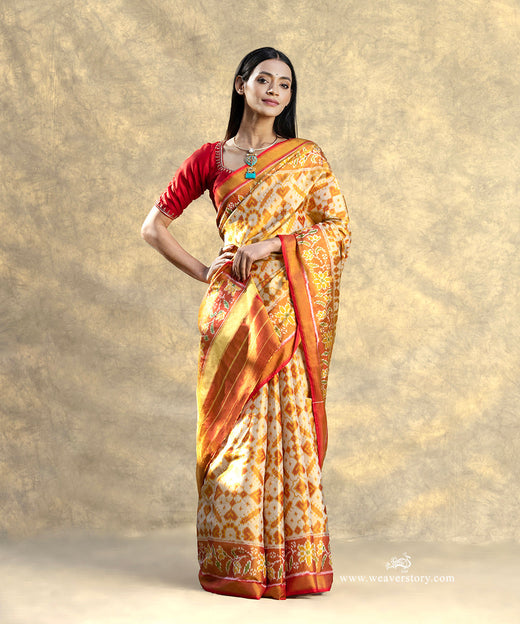
At WeaverStory, you'll find a thoughtfully curated collection of authentic Gujarat Patola and Patan Patola sarees, offering a variety of styles to suit festive occasions, weddings, and heirloom collections.
Popular Motifs Found in Patola Sarees
Traditional Patola weaving is celebrated for its symbolic motifs, each carrying cultural meaning and artistic significance.
Some of the most admired designs include:
- Elephants – representing wisdom, strength, and prosperity.
- Parrots – symbolising joy and harmonious relationships.
- Floral motifs – reflecting beauty, renewal, and elegance.
- Fish motifs – traditionally associated with abundance and good fortune.
- Geometric patterns – showcasing the mathematical precision of Double Ikat weaving.
- Dancing figures – inspired by celebration, culture, and festive traditions.
These timeless motifs continue to inspire contemporary collections while preserving the authenticity of the craft.
How to Style a Patola Saree
A Patola saree effortlessly combines heritage with modern elegance, making it suitable for a variety of occasions.
-
Wedding Celebrations: Pair a vibrant Patola saree with traditional gold jewellery, temple necklaces, or antique gold plated jhumka earrings for a regal bridal or wedding guest look.
-
Festive Occasions: Choose colourful Patola designs with zari accents for festivals like Diwali, Navratri, or family celebrations. A classic silk blouse complements the intricate weave beautifully. To look your best, consider reading a comprehensive a guide on banarasi saree choices for styling.
-
Contemporary Styling: For a modern interpretation, style your Patola saree with a structured blouse, statement earrings, and minimal accessories, allowing the craftsmanship to remain the focal point. To elevate your choice of ornaments, discover how to choose jewellery for saree ensembles.
Caring for Your Patola Saree
Proper care ensures your Patola saree remains beautiful for decades.
- Dry clean only to preserve the silk and colours. For step-by-step guidance, explore our resource on how to wash silk saree at home carefully.
- Store the saree in a breathable cotton or muslin fabric. To preserve the structure of luxury handlooms, it is helpful to look into how to store silk sarees correctly.
- Avoid prolonged exposure to direct sunlight.
- Refold the saree periodically to prevent permanent creases.
- Keep it away from moisture and perfumes during storage.
With proper care, a handcrafted Patola saree can become a treasured heirloom passed down through generations.
Discover Authentic Patola Sarees at WeaverStory
If you're inspired by this Patola Saree Guide, choosing an authentic handcrafted piece is the next step.
WeaverStory celebrates India's rich weaving heritage by curating exquisite Patola sarees handcrafted by skilled artisans across Gujarat. Every saree reflects meticulous craftsmanship, premium silk, and timeless artistry.
Some of the standout creations include:
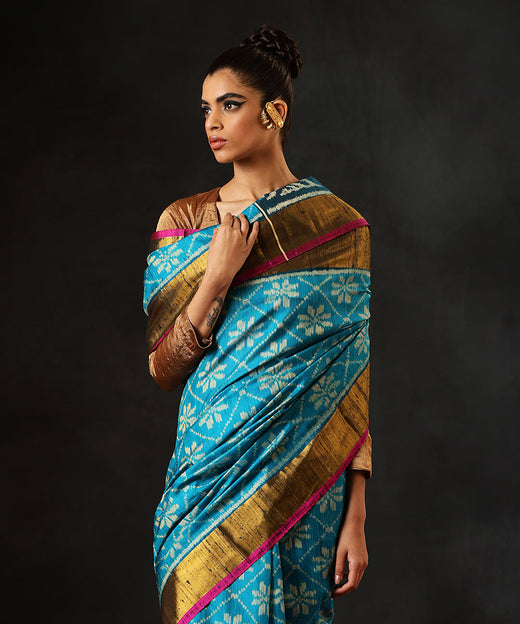
- Blue Handloom Pure Mulberry Silk Ikat Patola Saree with Plum Pallu & Gold Zari Border – A graceful combination of rich blue tones, luxurious silk, and elegant zari detailing, ideal for weddings and festive celebrations.
- Handloom Pink & Purple Pure Mulberry Silk Ikat Patola Saree with Flower Motifs – Featuring vibrant floral artistry and traditional Ikat weaving, this saree beautifully blends heritage with feminine elegance.
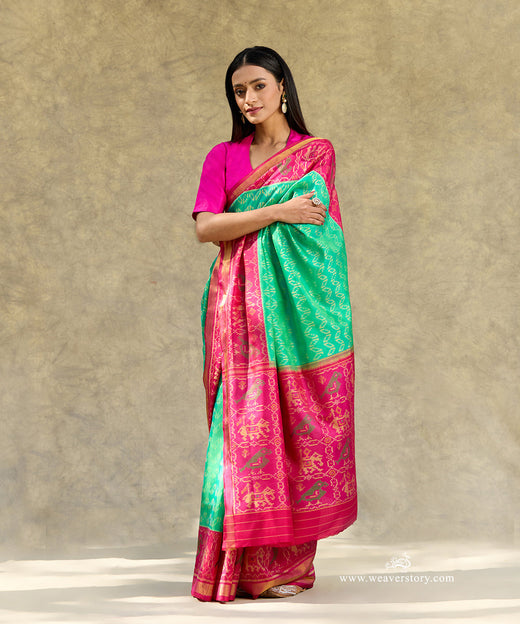
- Aqua Blue & Green Handloom Pure Mulberry Silk Ikat Patola Saree with Pink Border – A refreshing colour palette paired with classic craftsmanship makes it perfect for special occasions.
- Handwoven Teal Blue Patan Patola Saree – Showcasing the intricate artistry of authentic Patan weaving with striking traditional motifs.
- Handwoven Indigo Blue Patan Patola Saree – A timeless masterpiece crafted for collectors and those seeking an heirloom-worthy investment.
Each piece reflects WeaverStory's commitment to preserving India's handloom traditions while offering contemporary women authentic artisan-made luxury.
Conclusion
This Patola Saree Guide demonstrates why these remarkable textiles continue to be admired across generations. From the extraordinary Double Ikat weaving technique to the painstaking craftsmanship, symbolic motifs, and enduring cultural significance, every authentic Patola saree tells a story of artistry and tradition.
Whether you're purchasing your first Patola or adding to an existing collection, understanding its authenticity, craftsmanship, and pricing helps you make a meaningful investment in India's textile heritage.
Explore Authentic Patola Sarees at WeaverStory
Experience the beauty of genuine handwoven craftsmanship with WeaverStory's thoughtfully curated Patola collection. From elegant Gujarat Patola sarees to exquisite Patan Patola masterpieces woven in premium silk, every creation celebrates centuries of artisan excellence. Discover a saree that reflects your personal style while honouring one of India's most treasured weaving traditions—an heirloom you'll cherish today and for generations to come.
Frequently Asked Questions
Q1. How is a Patola saree different from other silk sarees?
A Patola saree is woven using the intricate Double Ikat technique, where both warp and weft threads are dyed before weaving. This creates identical patterns on both sides of the fabric, making it one of the world's most complex weaving traditions. To understand more about the underlying material, read our guide on types of silk sarees.
Q2. Can I wear a Patola saree for weddings and festive occasions?
Yes. Authentic Patola sarees are highly valued for weddings, cultural celebrations, festive gatherings, and family occasions because of their luxurious silk, vibrant colours, and timeless appeal. For alternative wedding looks, check our curated sangeet and cocktail sarees.
Q3. Is every Patola saree made using Double Ikat weaving?
No. While traditional Patan Patola is woven using Double Ikat, some Gujarat Patola sarees may feature Single Ikat weaving. Double Ikat remains the rarer and more intricate technique.
Q4. Will an authentic Patola saree last for generations?
Yes. With proper care and storage, a handcrafted Patola saree can remain beautiful for decades, making it a cherished heirloom passed from one generation to the next.
Q5. What makes an original Patola saree valuable?
Its value comes from months of handcrafting, intricate Double Ikat weaving, premium silk, limited artisan production, and centuries-old cultural heritage.
Q6. What should I check before buying a Patola saree?
Look for identical designs on both sides, premium silk quality, precise motif alignment, handcrafted detailing, and purchase from a trusted seller specialising in authentic handwoven textiles. To protect your investment, see our insights on how to identify a pure kanjivaram silk saree.
Q7. Why are authentic Patola sarees more expensive than machine-made versions?
Authentic Patola sarees require months of skilled craftsmanship, complex resist dyeing, premium silk, and meticulous handloom weaving, making them significantly more valuable than printed or machine-produced alternatives.
Q8. Why should I buy a handcrafted Patola saree from WeaverStory?
WeaverStory curates authentic artisan-crafted Patola sarees that celebrate India's rich handloom heritage. Every piece reflects exceptional craftsmanship, premium silk, timeless designs, and the enduring legacy of skilled weaving communities.