Skip to content




Sarees are crafted from a wide variety of fabrics, each offering a unique look, feel, and drape. Popular saree fabric names include Banarasi Silk, Kanjivaram Silk, Chanderi, Cotton, Linen, Organza, Georgette, Chiffon, Patola, and Tussar Silk. Understanding different fabrics helps you choose the right saree for weddings, festivals, workwear, and everyday elegance while appreciating India's rich textile heritage.
If you're exploring saree fabric names, understanding the characteristics of each fabric is the first step towards choosing the perfect saree. From luxurious silks to breathable cottons and contemporary organzas, every weave tells a unique story. At WeaverStory, we celebrate India's finest handloom traditions by curating authentic sarees that showcase the artistry of master weavers across the country.
Why Understanding Saree Fabric Names Matters
A saree's beauty is not determined by colour alone. The fabric influences how it drapes, how comfortable it feels, how it photographs, and how suitable it is for different occasions. Whether you're investing in a bridal heirloom or looking for an elegant everyday drape, knowing the different saree fabric names helps you make an informed choice.
Fabric Determines the Drape and Fall
A Banarasi silk saree creates a regal silhouette with its structured drape, while chiffon flows effortlessly and creates a softer appearance. The fabric you choose directly impacts how the saree sits on the body.
Different Fabrics Suit Different Occasions
Heavy silks are ideal for weddings and celebrations, while cotton and linen sarees are perfect for warm-weather comfort. Lightweight fabrics such as georgette and organza are increasingly popular for modern festivities and destination weddings.
Better Knowledge Leads to Better Purchases
Understanding saree fabric names allows you to identify quality, appreciate craftsmanship, and invest in sarees that align with your lifestyle and personal style.
Natural Saree Fabrics That Never Go Out of Style
India's textile legacy is deeply rooted in natural fibres. These fabrics are prized for their comfort, durability, and timeless appeal.
Silk Sarees
Silk has long been associated with luxury, celebration, and heritage. Handwoven silk sarees often become treasured heirlooms passed down through generations.
Banarasi Silk
Originating from Varanasi, Banarasi silk sarees are renowned for intricate zari work, rich motifs, and unmatched grandeur. They remain a preferred choice for bridal trousseaus and festive occasions.
Kanjivaram Silk
Woven in Tamil Nadu, Kanjivaram sarees are admired for their bold borders, vibrant colours, and exceptional craftsmanship. Their durability makes them a lifelong investment.
Tussar Silk
Known for its textured finish and natural golden sheen, Tussar silk offers understated elegance suitable for both celebrations and formal gatherings.
Muga Silk
Exclusive to Assam, Muga silk is celebrated for its natural lustre and remarkable longevity. Its distinctive golden hue makes it highly sought after.
Raw Silk
Raw silk features a slightly textured appearance that blends sophistication with versatility, making it suitable for contemporary and traditional styling.
Mysore Silk
Lightweight yet luxurious, Mysore silk sarees are known for their smooth texture and refined simplicity.
Authentic handloom silk often displays subtle irregularities that reflect the human touch of skilled artisans. These variations are signs of craftsmanship rather than imperfections.
Cotton Sarees
Cotton remains one of India's most beloved saree fabrics due to its comfort and versatility.
Handloom Cotton
Lightweight, breathable, and elegant, handloom cotton sarees are perfect for everyday wear and professional settings.
Jamdani Cotton
A masterpiece of weaving artistry, Jamdani sarees feature delicate motifs woven directly into the fabric.
Kota Doria
Recognisable by its distinctive square weave, Kota Doria is airy, lightweight, and ideal for summer.
Mul Cotton
Soft and feather-light, Mul cotton sarees offer unmatched comfort without compromising on elegance.
Khadi Cotton
Handspun and handwoven, Khadi reflects India's rich weaving heritage while supporting sustainable fashion.
Linen Sarees
Linen sarees have emerged as favourites among modern women seeking sophistication and comfort. Their crisp texture, elegant drape, and breathable nature make them suitable for workwear, brunches, and semi-formal occasions.
Among contemporary saree fabric names, linen strikes the perfect balance between tradition and modernity.
Traditional Indian Handloom Saree Fabrics
India's weaving traditions have given rise to some of the world's most extraordinary textiles.
Chanderi
Originating from Madhya Pradesh, Chanderi sarees are known for their lightweight texture, subtle sheen, and delicate motifs. They effortlessly blend elegance with comfort.
Maheshwari
Maheshwari sarees feature distinctive borders and lightweight construction, making them suitable for festive and formal wear.
Patola
Patola sarees from Gujarat represent one of India's most intricate weaving traditions. Their double ikat technique requires exceptional precision and artistry.
Ikat
Ikat weaving creates beautiful patterns through a complex resist-dyeing process. Each saree reflects extraordinary craftsmanship.
Paithani
Known for vibrant colours and intricate peacock motifs, Paithani sarees are symbols of Maharashtrian heritage and luxury.
Baluchari
Baluchari sarees are celebrated for narrative motifs woven into the pallu, often depicting scenes inspired by mythology and culture.
These heritage weaves demonstrate why many traditional saree fabric names are associated with specific regions, communities, and centuries-old weaving traditions.
Lightweight and Contemporary Saree Fabrics
Modern wardrobes increasingly embrace fabrics that combine elegance with ease of wear.
Organza
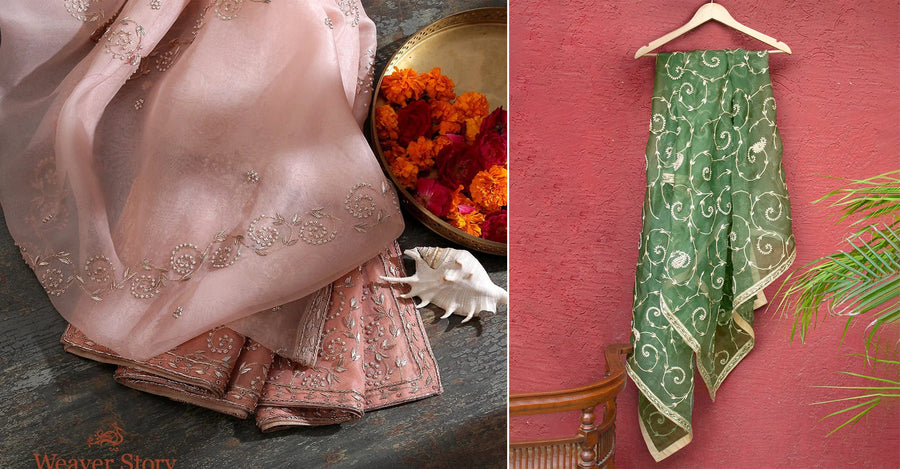
Organza sarees offer a structured drape and sheer sophistication. Their delicate appearance makes them popular for weddings and festive occasions.
Chiffon
Known for fluidity and grace, chiffon sarees create effortless movement and remain favourites for evening gatherings.
Georgette
Versatile and easy to drape, georgette suits a wide range of body types and occasions.
Crepe
Crepe sarees feature a textured finish and elegant fall, making them ideal for both formal and casual events.
Satin
Satin sarees are characterised by their smooth surface and luxurious sheen.
Tissue Sarees
Tissue sarees have gained popularity for their luminous appearance and festive appeal.
For women seeking versatility, these contemporary saree fabric names provide options that transition seamlessly between traditional and modern styling.
How to Choose the Right Saree Fabric
- For Weddings: Opt for Banarasi Silk, Kanjivaram, Patola, or handwoven tissue sarees.
- For Festivals: Chanderi, Maheshwari, Organza, and Tussar Silk offer the perfect festive balance.
- For Office Wear: Cotton, Linen, and lightweight handloom weaves provide comfort and elegance.
- For Summer: Mul Cotton, Kota Doria, and Linen help you stay comfortable during warmer months.
- For Evening Gatherings: Chiffon, Georgette, and Satin create graceful silhouettes and effortless movement.
Conclusion
Learning about saree fabric names opens the door to understanding India's extraordinary textile heritage. Every weave, from the grandeur of Banarasi Silk to the understated elegance of Linen, carries a distinct identity shaped by generations of artisans. Whether you're building a timeless wardrobe or searching for a special occasion saree, knowledge of different fabrics helps you appreciate both craftsmanship and quality.
Discover Authentic Handloom Sarees at WeaverStory
At WeaverStory, every saree is a celebration of India's weaving legacy. Our carefully curated collection features exquisite handwoven creations from some of the country's most respected weaving traditions. Whether you're drawn to the richness of Banarasi Silk, the grace of Chanderi, the sophistication of Organza, or the timeless appeal of Cotton and Linen, you'll find pieces that honour heritage while complementing contemporary lifestyles.
Explore WeaverStory's collection of authentic handloom sarees and experience the beauty of craftsmanship woven into every thread.
Frequently Asked Questions
Q1. How do I choose the best saree fabric for my body type?
Choose fabrics based on the silhouette you want. Structured fabrics such as silk add volume, while chiffon and georgette create a softer drape.
Q2. How can I identify an authentic handloom saree?
Look for slight irregularities in the weave, hand-finished details, and purchase from trusted handloom specialists.
Q3. Can cotton sarees be worn for formal occasions?
Yes. Premium handloom cotton sarees paired with elegant accessories can be excellent choices for formal events.
Q4. Is silk the most expensive saree fabric?
Not always. While silk is premium, factors such as weaving complexity, artisan skill, and rarity can make fabrics like Patola exceptionally valuable.
Q5. Will handloom sarees last longer than machine-made sarees?
With proper care, authentic handloom sarees often last for decades and can become treasured family heirlooms.
Q6. What are the most popular saree fabric names in India?
Banarasi Silk, Kanjivaram, Cotton, Linen, Chanderi, Organza, Georgette, Tussar Silk, Patola, and Paithani are among the most popular.
Q7. Why are handloom sarees considered special?
Each handloom saree reflects the skill, time, and cultural heritage of artisans, making every piece unique.
Q8. What is the best saree fabric for hot weather?
Cotton, Linen, Mul Cotton, and Kota Doria are excellent choices for comfort during warm and humid conditions.