Skip to content




Madhubani saree price generally ranges from around ₹21,990–₹26,995, depending on the fabric, painting technique, artwork complexity, artisan labour, and finishing. Printed sarees usually cost less than individually hand-painted pieces, while premium handloom fabrics such as Chanderi, linen, and silk can increase the price. Authenticity, detailing, and small-batch craftsmanship also influence the final value.
A Madhubani saree price can range from accessible printed styles to premium hand-painted pieces, depending on what goes into making the saree. Fabric, artwork, labour and finishing all matter. At WeaverStory, traditional Mithila artistry meets handloom craftsmanship—but understanding the price starts with knowing what you are actually paying for.
Madhubani Saree Price at a Glance
There is no single fixed price for a Madhubani saree. Two sarees may feature similar motifs yet have very different prices because one uses printed artwork and the other is individually painted by an artisan on a premium handloom fabric.
|
Saree Type |
General Price Position |
Main Cost Factors |
|
Madhubani print saree |
Accessible |
Printing method, fabric and design |
|
Cotton Madhubani saree |
Budget to mid-range |
Cotton quality and artwork |
|
Hand-painted Madhubani saree |
Mid to premium |
Artisan labour and detailing |
|
Chanderi Madhubani saree |
Premium |
Handloom fabric and hand-painted artwork |
|
Linen Madhubani saree |
Premium |
Linen quality, painting and finishing |
|
Silk or Tussar Madhubani saree |
Premium to luxury |
Silk quality, craftsmanship and artwork |
Current WeaverStory Madhubani sarees provide a useful premium handcrafted benchmark, with collection pieces around the ₹21,990–₹26,995 range. The exact price depends on the individual fabric, artwork and finishing.
Why Does the Madhubani Saree Price Vary?
A saree is more than its visible pattern. The price reflects the materials, time, skill and processes involved in creating the finished piece.
The most important factors include:
-
Fabric: Chanderi, linen, silk and Tussar can command different prices from everyday cotton.
-
Painting technique: Hand-painted artwork requires individual artisan attention.
-
Design complexity: Intricate motifs, dense borders and detailed pallus require more time.
-
Artisan skill: Fine line work and traditional detailing depend on trained craftsmanship.
-
Handloom production: Handwoven fabrics involve specialised weaving processes.
-
Finishing: Borders, zari, tissue detailing and other finishing elements can add value.
-
Production scale: Small-batch handcrafted pieces generally involve a different cost structure from mass-produced designs.
Understanding these factors makes it easier to compare sarees based on value rather than price alone.
How Does Fabric Affect Madhubani Saree Price?
The fabric forms the foundation of the saree, so it naturally influences its final cost. If you are still getting familiar with fabric terminology, our guide to the different types of saree fabric breaks down what each name actually means.
Cotton can offer a lightweight and practical option for regular wear. Linen brings a crisp texture and contemporary character, while Chanderi is valued for its delicate handloom structure and graceful drape. Silk and Tussar can offer a richer appearance suited to festive and occasion dressing.
For example, a hand-painted design on handloom Chanderi combines two forms of craftsmanship: weaving and painting. A hand-painted linen saree combines the character of linen with the labour of detailed artwork.
This is why comparing only the motif or colour is not enough. Always look at the fabric, construction and artwork together.
What Is the Madhubani Painting Saree Price Based On?
The madhubani painting saree price depends heavily on the amount and complexity of artwork.
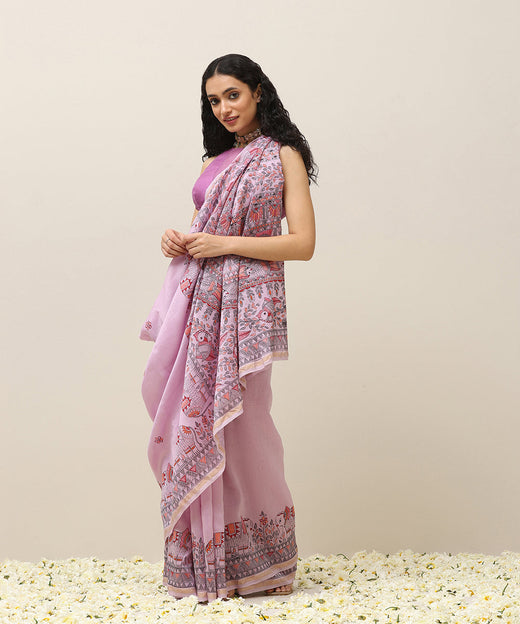
A saree with a relatively simple border requires less painting time than one covered with intricate motifs across the body, pallu and border. Fine lines, repeated patterns, multiple colours and detailed figures can all increase the amount of artisan work involved.
Traditional motifs can include:
-
Fish
-
Peacocks
-
Elephants
-
Lotus flowers
-
Trees and foliage
-
Sun and moon
-
Mythological and cultural figures
Hand-painted artwork also has a quality that printed reproduction cannot completely replicate: the subtle individuality created by the artisan's hand. Small variations are part of handmade craftsmanship rather than flaws.
Hand-Painted vs. Madhubani Print Saree Price
One of the easiest ways to understand pricing is to compare hand-painted and printed sarees.
|
Factor |
Hand-Painted Madhubani |
Printed Madhubani |
|
Creation |
Painted individually by an artisan |
Reproduced through a printing process |
|
Artwork |
Individual and naturally varied |
More uniform |
|
Labour |
Higher |
Generally lower |
|
Price position |
Usually higher |
Generally more accessible |
|
Craft value |
Strong emphasis on artisan work |
Strong emphasis on design and affordability |
|
Best suited for |
Heritage, festive and statement dressing |
Everyday and versatile styling |
A madhubani print saree price is generally more accessible because the artwork does not require an artisan to individually paint every design on the fabric. That does not make printed sarees inferior; they simply represent a different balance of design, production and cost.
If the hand-painted process itself is important to you, check the product description carefully before purchasing.
What Is the Difference Between Madhubani and Mithila Painting Sarees?
Madhubani and Mithila painting refer to the same broader artistic tradition associated with the Mithila region of Bihar. The terms are often used interchangeably when discussing this art on textiles.
Therefore, the mithila painting saree price does not depend simply on whether the product is labelled "Mithila" or "Madhubani." The meaningful pricing factors remain the fabric, painting technique, artwork coverage, artisan labour and finishing.
The art is recognised for its strong lines, symbolic motifs, filled compositions and connection to cultural traditions. When translated onto a saree, these characteristics become wearable expressions of the same artistic heritage.
7 Key Factors That Affect Madhubani Saree Price
1. Fabric Quality
Premium handloom fabrics add material and weaving value to a saree. Chanderi and linen, for instance, create a different feel and drape from cotton. If you are weighing up which fibre suits your needs, our silk vs cotton saree comparison covers the practical differences.
2. Hand-Painting Technique
Individual painting takes time and concentration. Every motif has to be placed, outlined and finished carefully.
3. Complexity of Artwork
A densely painted saree with elaborate borders and pallu work involves more effort than one with limited artwork.
4. Artisan Time and Skill
Traditional artwork depends on practiced hand skills. A detailed saree can take days or even weeks to complete, depending on the design and extent of painting.
5. Handloom Construction
Handwoven fabric adds another layer of craftsmanship before the painting process even begins. Understanding the difference between handloom vs power loom sarees helps explain why handwoven pieces sit at a different price point.
6. Borders and Embellishments
A saree featuring hand-painted borders, zari or tissue detailing can occupy a higher price segment because these elements require additional materials or workmanship.
7. Authenticity and Sourcing
Transparent artisan sourcing adds confidence to a purchase. Information about the craft, fabric, production method and makers helps buyers understand what they are purchasing.
Why Are Authentic Madhubani Sarees More Expensive?
An authentic handcrafted saree carries the cost of human time and specialised skill.
Mass production can reproduce a visual pattern quickly. Hand painting works differently. The artisan must work directly on the fabric, maintain the composition and create the details by hand.
At WeaverStory, Madhubani pieces connect traditional Mithila artistry with handloom fabrics and small-batch craftsmanship. The collection includes work created by women artisans from Mithila, with traditional artistic guidance and attention to detail.
That distinction matters because the value of a handcrafted saree extends beyond its appearance. It represents a process, a skill and a living craft tradition.
How to Choose a Madhubani Saree Within Your Budget
Start with the purpose of the purchase rather than the price tag.
For an accessible everyday option
Look for:
-
Printed Madhubani designs
-
Lightweight cotton
-
Simpler patterns
-
Limited artwork
For a handcrafted everyday saree
Consider:
-
Linen or cotton
-
Hand-painted borders
-
Moderate motif coverage
-
Comfortable, practical fabrics
For a premium occasion saree
Look for:
-
Hand-painted artwork
-
Chanderi or silk
-
Detailed motifs
-
Elaborate borders or pallus
For a statement or heirloom piece
Prioritise:
-
Extensive hand painting
-
Premium handloom fabric
-
Intricate artwork
-
Strong artisan provenance
-
Small-batch craftsmanship
The right choice is the one that matches your intended use and the type of craftsmanship you value.
Madhubani Sarees from WeaverStory to Explore
WeaverStory's collection brings together traditional Mithila-inspired artwork and carefully selected handloom fabrics.
-
The Handloom Fresh Green Chanderi Handpainted Madhubani Saree With Multicolor Women Motifs at ₹21,995 demonstrates how Chanderi fabric and detailed hand painting can create a refined statement saree.
-
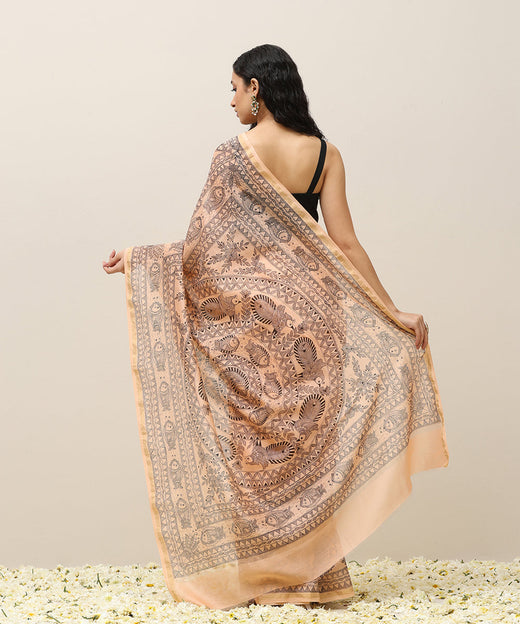
For a lighter, contemporary feel, the Light Peach Handloom Linen Handpainted Madhubani Saree With Peacock Motifs and Silver Tissue Border at ₹26,995 combines linen with hand-painted peacock motifs and a decorative border.
-
The Handloom Light Peach Chanderi Madhubani Saree with Handpainted Fish Motifs in Black Ink at ₹21,995 highlights one of the most recognisable traditional motifs through a more focused colour palette.
-
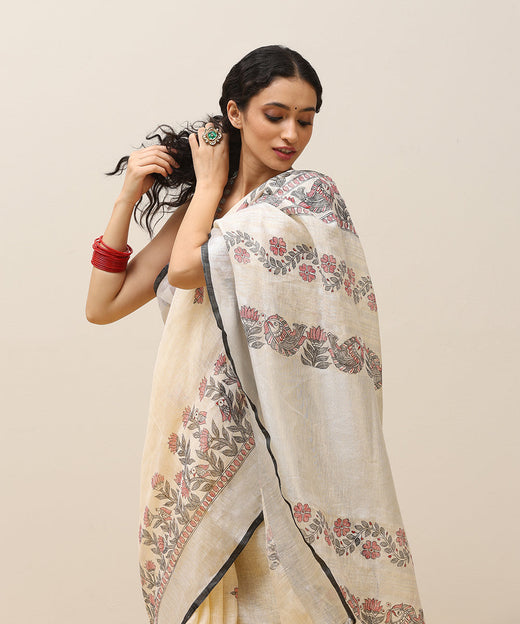
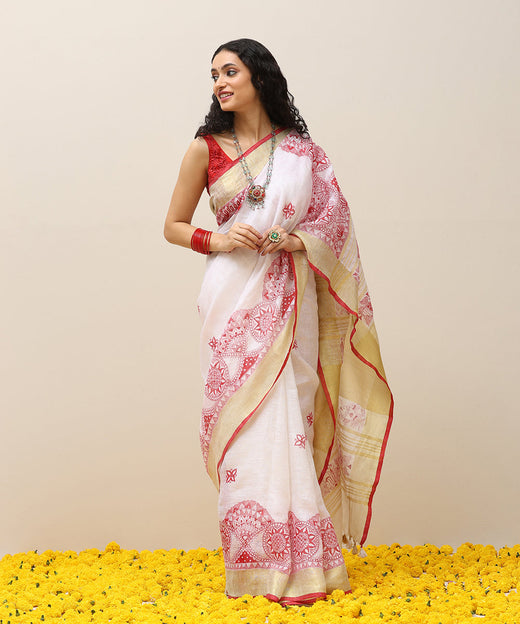
Another distinctive option is the Handloom Offwhite Linen Saree With a Handpainted Madhubani Border in Red at ₹26,995, where the artwork is concentrated around the border for an understated yet artistic look.
-
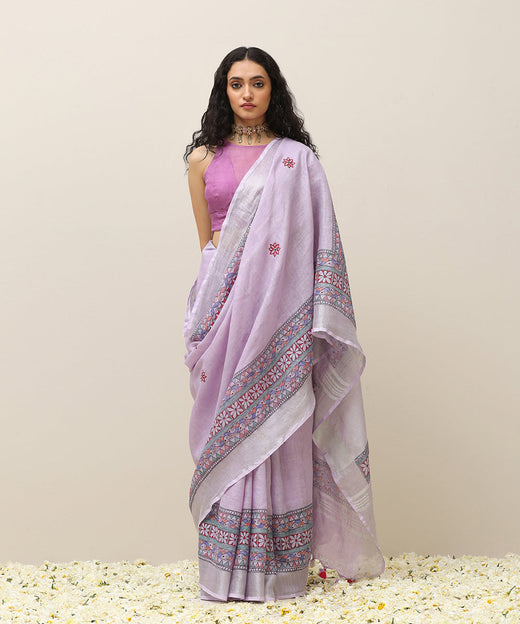
The Lavender Handloom Chanderi Madhubani Saree With Elephant Motifs Handpainted on the Border at ₹21,995 offers another example of how traditional motifs can be interpreted for a contemporary wardrobe.
These pieces illustrate why looking beyond the number on the price tag matters: fabric, painting, motif placement and finishing all contribute to the overall value.
How Can You Tell If a Madhubani Saree Is Worth Its Price?
Before buying, look beyond the headline price and ask a few practical questions:
-
What fabric is used?
-
Is the artwork hand-painted or printed?
-
How much of the saree is painted?
-
Are the borders and pallu detailed?
-
Is artisan information provided?
-
Does the seller explain the production process?
-
Are close-up images available?
-
Are care instructions clearly stated?
A transparent product description makes it easier to understand whether the price matches the materials and craftsmanship.
Is a Higher Madhubani Saree Price Always Better?
No. A higher price does not automatically mean a better saree.
Value should be assessed according to the combination of fabric quality, craftsmanship, artwork, labour, authenticity and finishing.
A simple hand-painted cotton saree may be the better choice for someone who wants lightweight everyday wear, while an intricately painted Chanderi or silk saree may be more appropriate for someone looking for a special occasion or heirloom piece.
The best saree is not necessarily the most expensive one. It is the one whose craftsmanship, fabric and design genuinely suit your needs.
How to Care for a Hand-Painted Madhubani Saree
Hand-painted sarees deserve careful handling to preserve both fabric and artwork.
Follow these basic practices:
-
Follow the care instructions provided with the saree.
-
Use professional cleaning when recommended.
-
Avoid harsh detergents and unnecessary friction.
-
Store the saree in a clean, dry, and breathable environment. For silk pieces, our guide on how to store silk sarees explains folding and long-term protection.
-
Keep it away from prolonged direct sunlight.
-
Fold and refold stored sarees periodically to avoid permanent creasing in one place.
Proper care protects the investment you make in handcrafted clothing.
Find a Madhubani Saree That Reflects the Art, Not Just the Price
The real value of a Madhubani saree lies in everything behind its finished appearance—the fabric that forms its foundation, the artisan's time, the traditional motifs, the painting process and the craftsmanship that brings it all together.
If you are looking for a saree that carries this heritage into a contemporary wardrobe, explore WeaverStory's Madhubani collection and discover hand-painted designs created with handloom fabrics and the artistry of Mithila.
Explore WeaverStory's Madhubani Sarees and choose a piece where traditional craftsmanship becomes something you can wear, preserve and pass forward.
Frequently Asked Questions
Q1. What is the typical Madhubani saree price?
There is no universal price. Fabric, painting technique, artwork complexity, artisan labour and finishing determine the final cost.
Q2. Why are hand-painted Madhubani sarees expensive?
Hand-painted sarees require individual artisan labour, detailed workmanship and considerable time, making them more labour-intensive than printed alternatives.
Q3. How is the Madhubani painting saree price determined?
It depends on factors such as fabric, painting coverage, motif complexity, borders, pallu detailing and the time required to complete the artwork.
Q4. Can a Madhubani print saree be less expensive?
Yes. Printed designs generally have a lower production cost because the artwork is reproduced rather than individually painted on each saree.
Q5. Is the Mithila painting saree price different from a Madhubani saree?
Not necessarily. Madhubani and Mithila commonly describe the same broader artistic tradition, so pricing depends more on fabric, technique and craftsmanship.
Q6. What makes an authentic Madhubani saree valuable?
Authentic craftsmanship, hand-painted details, quality fabric, skilled artisan work, traditional motifs and transparent sourcing all contribute to its value.
Q7. Will hand-painted Madhubani artwork have slight variations?
Yes. Minor variations in hand-painted lines, motifs or colour application are natural characteristics of handmade work and can make each piece distinctive.
Q8. What should I check before buying a Madhubani saree?
Check the fabric, painting technique, artwork coverage, artisan information, product photographs, care requirements and overall construction before making your decision.
```html id="faq-madhubani-saree-price-schema"